
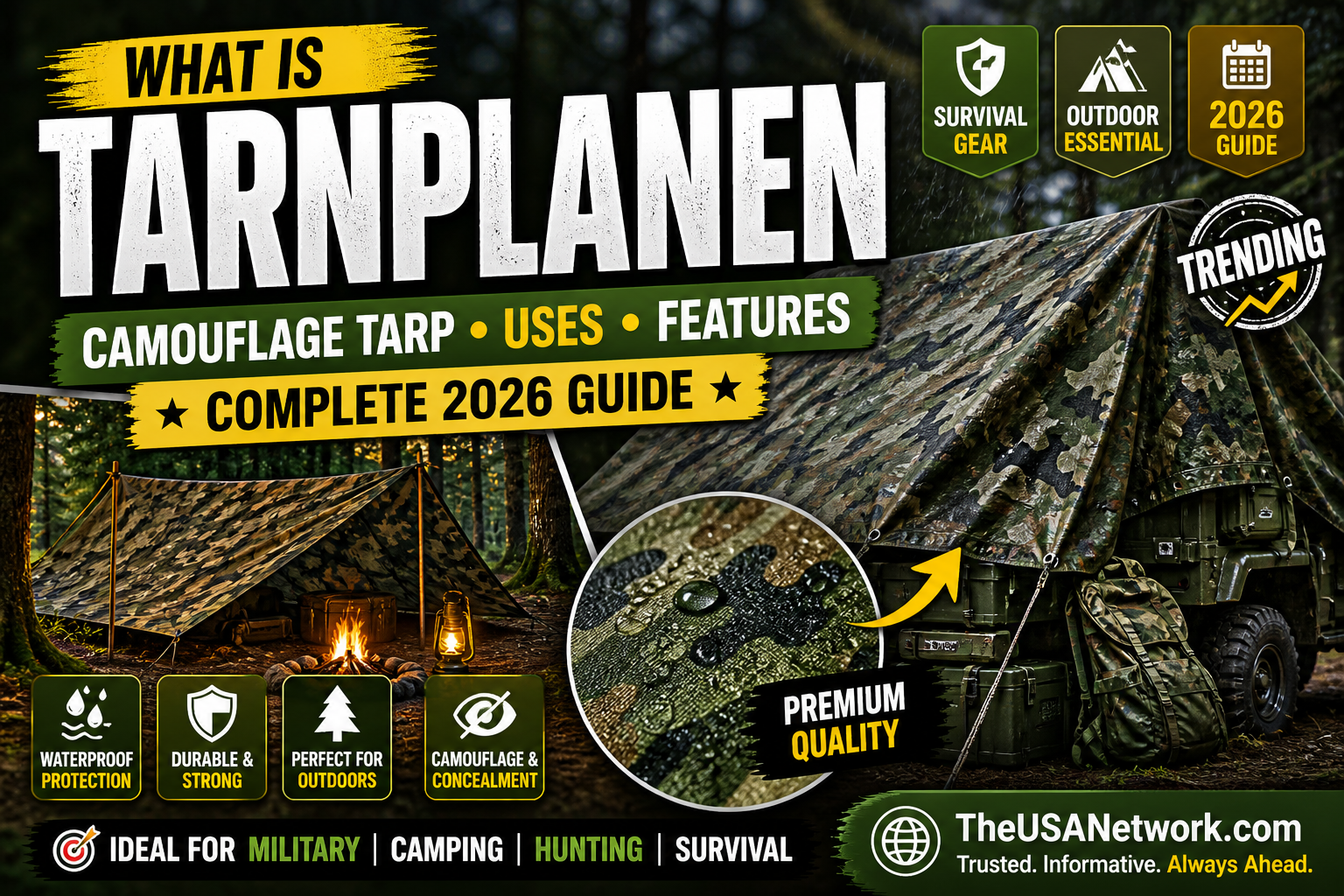
Most people find out about Tarnplanen the hard way. They buy a cheap tarp online, take it out on their first camping or hunting trip, and realize within hours that it flaps in the wind, glows under moonlight, and tears at the grommets before the weekend is over.
That is exactly the problem this guide solves.
Unlike other articles that simply explain what the word means or list basic facts, this guide takes you through everything you actually need to know before spending money on a Tarnplanen – from how the material behaves in real conditions to the setup mistakes even experienced users make.
Whether you are a weekend camper, a serious hunter, a backyard hobbyist, or someone preparing for emergencies, the information here will save you time, money, and frustration.
What Is Tarnplanen, and Why Is It Different From a Regular Tarp?
The word Tarnplanen comes from two German words: Tarn, meaning camouflage or concealment, and Planen, meaning tarpaulins or covers. Together, the word describes camouflage tarpaulins – covers designed not just to protect, but to hide.
That single difference changes everything.
A regular tarp is built for one job: keep things dry. It does not care about color, pattern, or how it looks from 50 meters away. Tarnplanen, on the other hand, is built for two jobs at once – protect and conceal. The material, the pattern, the grommets, the weight – every feature is designed with both functions in mind.
Here is a simple way to understand the difference:
Imagine you are in a forest and you throw a bright blue tarp over your tent setup. Anyone walking within 300 meters can spot it immediately. The same setup with a quality Tarnplanen becomes nearly invisible. The pattern breaks up the human-made outline, the colors match the surrounding trees and ground, and from any distance, it looks like a natural part of the environment.
That is the core value of Tarnplanen – it does not just cover things, it makes them disappear.
The Real History: Where Tarnplanen Actually Came From
Most articles talk about Tarnplanen’s military history in vague terms. Here is what actually happened and why it matters for buyers today.
During World War I, armies discovered that equipment and positions painted in solid colors were easy targets for aerial observation. The response was early camouflage – irregular patterns that broke up the visual outline of objects when viewed from above or from a distance.
By World War II, German forces had developed dedicated Tarnplanen – covers made from heavy canvas or cotton blends, printed with irregular woodland or terrain patterns. These were not luxury items. They were survival tools. Soldiers used them to conceal artillery positions, vehicles, and command tents from enemy aircraft and scouts.
What changed in the post-war period was not the concept – it was the materials. Synthetic fabrics like nylon and polyester replaced heavy canvas. Waterproof coatings replaced bulky wax treatments. Digital camouflage patterns replaced hand-painted designs.
The result is the modern Tarnplanen – lighter, stronger, more effective, and now available to civilians for a fraction of the cost of early military versions.
Understanding this history matters because it explains why Tarnplanen is built the way it is. Every feature traces back to a specific military need. When you understand that, choosing the right one for your situation becomes much easier.
Exploring unusual and trending terms is something we cover regularly — read our complete breakdown of Nionenad for another deep-dive into an emerging 2026 topic.
The 4 Materials Used in Tarnplanen – and Which One You Actually Need
This is where most buying guides fail completely. They list materials without telling you what those materials mean in real use. Here is the honest breakdown.
1. Polyester with PU Coating
This is the most common material in consumer-grade Tarnplanen sold today. Polyester fibers are woven tightly and then coated with polyurethane on the underside.
What it is good for: Weekend camping, backyard use, light hiking, budget buyers.
What it struggles with: Extended field use, sharp rocks or branches, long-term UV exposure. The PU coating can crack over time if the tarp is stored folded in heat.
Weight range: 150g to 300g per square meter.
2. Nylon with PU or Silicone Coating
Nylon is lighter and more tear-resistant than polyester at the same weight. Silicone-coated nylon (silnylon) is the preferred material for serious outdoor users because it is almost half the weight of PU-coated polyester while offering comparable waterproofing.
What it is good for: Backpackers, long-distance hikers, users who prioritize packability.
What it struggles with: Silnylon stretches when wet, which changes how it sits under load. It also costs more than polyester alternatives.
Weight range: 40g to 150g per square meter.
3. Canvas and Cotton-Blend
Heavy, breathable, and extremely durable. Canvas Tarnplanen feel and behave completely differently from synthetic options. They do not crinkle loudly in wind, they breathe naturally, and they handle abrasion extremely well.
What it is good for: Permanent or semi-permanent setups, vehicle covers, positions where noise discipline matters, users who dislike the feel of synthetic materials.
What it struggles with: Weight and bulk. Canvas absorbs moisture until it reaches saturation, at which point it repels water — but getting there takes time. Canvas also takes longer to dry.
Weight range: 400g to 700g per square meter.
4. Reinforced Woven Polypropylene (Like Tyvek-style or PE tarps)
This is the budget option. Woven polypropylene is cheap, waterproof, and available in camouflage patterns — but it is also noisy, stiff, and breaks down quickly under UV exposure.
What it is good for: One-time use, emergency kits, very short deployments.
What it struggles with: Longevity. Most woven PE tarps become brittle within 1 to 2 seasons of outdoor use.
Bottom line for buyers: If you are spending money once and want it to last, choose nylon with silicone or PU coating for lightweight use, or canvas if weight is not a concern and durability is everything.
Tarnplanen Patterns Explained: Forest, Desert, Urban, and Digital
Not all camouflage is equal. The pattern on your Tarnplanen directly determines how effective it is in your environment. Using the wrong pattern is worse than using no camouflage at all — a woodland pattern in a snowy field or a desert pattern in dense forest creates high contrast against the background, making you more visible, not less.
Woodland and Forest Patterns
Green, dark brown, tan, and black in irregular organic shapes. Designed to mimic the broken light and shadow of forest floors and canopy gaps.
Best environments: Temperate forests, jungles, dense vegetation, late spring through early autumn.
Avoid in: Open desert, snow, urban areas.
Desert and Arid Patterns
Tan, sand, light brown, and muted ochre in horizontal or diagonal streaks that mimic rock, sand, and dried grass.
Best environments: Open desert, dry scrubland, rocky terrain, savanna.
Avoid in: Green forests, urban settings.
Urban and Concrete Patterns
Grey tones, asphalt textures, industrial blacks, off-whites. Designed for environments dominated by concrete, brick, and man-made surfaces.
Best environments: Cities, warehouses, industrial zones, parking structures.
Avoid in: Natural outdoor environments.
Digital or Pixelated Patterns
Unlike older patterns based on organic shapes, digital patterns use small square pixels of varying colors. The idea is that pixelated patterns confuse both human eyes and optical sensors because the hard edges at micro scale become soft edges at viewing distance.
Best environments: Multi-terrain versatility. A well-designed digital pattern works across more environments than single-terrain patterns.
Used by: US Armed Forces (MARPAT), Canadian Forces (CADPAT), and many modern military units.
Practical buying tip: Most civilian buyers in North America or Northern Europe should start with a woodland or multi-terrain digital pattern. It handles the widest range of conditions across changing seasons.
7 Real-World Uses for Tarnplanen That Most Guides Skip
You already know Tarnplanen is used in the military and for camping. Here are the less-discussed uses that often surprise people.
1. Vehicle and Equipment Cover for Hunters
Hunters who drive into hunting areas in bright trucks or ATVs often defeat the purpose of wearing camouflage. Covering your vehicle with a large Tarnplanen removes the high-contrast object that alerts deer, elk, and other animals long before you are in position.
2. Photography Blinds for Wildlife and Bird Watchers
Wildlife photographers spend hours or days building blinds from natural materials. A properly staked Tarnplanen over a basic frame creates a functional photography hide in under 20 minutes. The concealment lets photographers approach subjects to within striking distance for long lenses without disturbing behavior.
3. Rain Collection in Survival Situations
A Tarnplanen suspended at a slight angle between two trees, with one low end directing water into a container, collects significant amounts of drinkable rainwater during light rain events. The large surface area – typically 3×3 meters to 4×4 meters – captures far more water than improvised alternatives.
4. Greenhouse and Garden Frost Protection
Gardeners in variable climates use Tarnplanen to protect cold-sensitive plants during unexpected frosts. The camouflage color also reduces visual impact in formal garden settings. Unlike clear plastic sheeting, Tarnplanen does not create greenhouse overheating during warm periods because the camouflage pattern reflects and diffuses rather than concentrating light.
5. Emergency Shelter for Road Trips and Vehicles
A compact Tarnplanen kept in a vehicle’s emergency kit can function as emergency overnight shelter if you become stranded in a remote area. Combined with basic cordage and two trees, it provides overhead protection in under five minutes.
6. Concealment for Trail Cameras and Security Equipment
Landowners and wildlife managers who use trail cameras often find equipment stolen or tampered with. Draping a small Tarnplanen over a camera housing — leaving only the lens exposed – dramatically reduces visibility to casual observers.
7. Outdoor Event Shade Structure
Large Tarnplanen suspended between poles or trees create shade structures for outdoor events that blend into wooded settings far more naturally than bright-colored canopies. This is popular for outdoor wedding venues, festival grounds, and eco-tourism camps that want infrastructure without visual impact.
For more ideas on blending outdoor gear with home and lifestyle aesthetics, browse our Interior Design section.
The 5 Mistakes People Make With Tarnplanen (and How to Fix Them)
Mistake 1: Using the Wrong Size
Most first-time buyers underestimate how much of the tarp disappears under attachment points and structural overhang once it is rigged. A tarp that measures 3×3 meters will cover roughly 2.4×2.4 meters of usable shelter space after setup. Always buy 20 to 30 percent larger than your minimum coverage need.
Mistake 2: Ignoring Grommet Quality
The weakest point of any Tarnplanen is the grommets – the metal rings that attachment cords pass through. On cheap tarps, grommets are thin aluminum or plastic that tear out under moderate tension. Quality Tarnplanen uses brass or stainless steel reinforced grommets, often with additional webbing stitching around the attachment point. Check grommet reinforcement before buying.
Mistake 3: Storing the Tarp Folded When Wet
Storing a wet tarp folded in a stuff sack – even for a few hours – is the fastest way to destroy the waterproof coating and create mold in the fabric seams. Always dry a Tarnplanen fully before storage, or hang it loosely rather than stuffing it.
Mistake 4: Setting Up Too Tight
A Tarnplanen stretched completely flat and tight cannot shed wind effectively – it becomes a sail. Adding a slight bow or curve to the shelter line, or pitching one side higher than the other, allows the tarp to flex in wind without stressing attachment points.
Mistake 5: Choosing Pattern Over Function
It looks cool, but choosing a Tarnplanen based on pattern alone without considering fabric weight, coating type, and grommet quality leads to disappointment. A light nylon tarp with a plain color will outperform a heavy canvas tarp with a beautiful digital pattern in almost every practical outdoor situation.
How to Set Up a Tarnplanen: 3 Proven Configurations
The A-Frame (Most Common)
Run a ridgeline cord between two trees at approximately head height. Drape the Tarnplanen over the ridgeline with equal coverage on both sides. Stake the outer edges low to the ground using grommet attachment points. The result is a tent-like structure with two protected sides.
Best for: Rain protection, moderate wind, sleeping shelter.
The Lean-To
Attach one side of the Tarnplanen high on a ridgeline or between two trees, and stake the opposite side close to the ground at a low angle. This creates a single open-faced shelter that maximizes visibility while protecting from rain and wind from one direction.
Best for: Hunters, photographers, observation positions, campfire integration.
The Diamond Setup
Orient the Tarnplanen at 45 degrees to the ridgeline, attaching the center of one edge to the high point. Pull the opposite corner low and stake it, then splay the remaining two corners out as side wings. This creates a dramatic overhang shelter that handles heavy rain exceptionally well.
Best for: High rainfall environments, minimal footprint, single user overnight shelter.
What to Look For When Buying Tarnplanen in 2026
The camouflage tarp market has expanded considerably. There are now options ranging from under $15 to over $200, and the price difference is not always obvious in product photos. Here is what separates quality from cheap in practical terms.
Seam Sealing: Quality Tarnplanen has seam-sealed or taped edges. Water enters cheaper tarps at the seams long before it penetrates the fabric itself. Run your fingers along any seam in a product listing photo — visible tape or sealed coating is a good sign.
GSM Rating: GSM stands for grams per square meter and tells you the fabric weight. For general outdoor use, 70 to 150 GSM nylon is appropriate. For heavy-duty use or vehicle coverage, 200 to 400 GSM canvas or polyester is more appropriate. Products that do not list GSM are often on the lower end.
Hydrostatic Head Rating: This measures waterproofing in millimeters. Ratings below 1,000mm will fail in moderate rain. Quality outdoor Tarnplanen should be rated at 2,000mm or higher. Military-grade options are often rated above 5,000mm.
Guy-Line Loops and Attachment Points: Beyond grommets, look for reinforced loops along edges and at midpoints. More attachment options give more flexibility in how you rig the tarp and where you position anchors.
Tarnplanen vs. Standard Tarp: A Side-by-Side Comparison
| Feature | Standard Tarp | Tarnplanen |
|---|---|---|
| Primary Purpose | Weather protection | Weather protection + visual concealment |
| Color/Pattern | Solid bright colors | Camouflage patterns |
| Visibility | High | Low |
| Material options | PE, polyester | Nylon, canvas, polyester |
| Typical GSM range | 70–200 | 70–500 |
| Military grade available | Rarely | Yes |
| Price range | $5–$50 | $15–$250+ |
| Best for | Construction, household, storage | Outdoor, hunting, military, camping |
Frequently Asked Questions About Tarnplanen
Is Tarnplanen the same as a camo tarp?
Essentially yes. Tarnplanen is the German-origin term for camouflage tarpaulins. In English-speaking countries, the same product is often called a camo tarp, military tarp, or tactical tarp. The functional difference is in quality and specification — products marketed under the Tarnplanen name often emphasize military heritage and heavier-duty construction.
Can Tarnplanen block infrared detection?
Some specialized military-grade Tarnplanen include materials that reduce infrared signature, making them harder to detect with night vision or thermal imaging equipment. Standard consumer Tarnplanen does not include this feature. If IR reduction is important for your application, look specifically for products with IR-defeating specifications and prepare to pay significantly more.
How do I clean a Tarnplanen?
Shake off loose debris and rinse with cold water. For heavier soiling, use a soft brush with mild soap — avoid detergents with optical brighteners, which can actually make synthetic fabrics more visible under certain lighting conditions. Always air dry fully before folding or storing.
What size Tarnplanen do I need for one person overnight shelter?
A minimum of 3×3 meters provides enough coverage for a single person with their gear in most configurations. For comfortable two-person use with gear space, 4×4 meters or larger is recommended.
Is Tarnplanen legal to use in public areas?
In most countries, owning and using Tarnplanen is entirely legal. Some regions regulate the use of military-pattern camouflage in public spaces or near government facilities, but outdoor recreational use is generally unrestricted. Always check local regulations before using camouflage in hunting areas, where season-specific visibility requirements may apply.
Final Thoughts: Is a Tarnplanen Worth It?
The honest answer is: it depends entirely on what you are buying it for.
If you need a cover for garden furniture or a spare tarp in your garage, a standard polyethylene tarp at a fraction of the cost does the job perfectly well. Tarnplanen adds value specifically in situations where concealment matters — hunting, wildlife photography, serious camping, emergency preparedness, or any outdoor activity where blending into the environment changes your outcomes.
When concealment does matter, quality Tarnplanen pays for itself quickly.If you are also reconsidering your bedroom furniture with the same long-term mindset, our guide on jernsenger iron beds covers exactly that kind of durable investment thinking.A $70 silicone-coated nylon Tarnplanen that sets up in five minutes, lasts for years, and performs in heavy rain is better value over its lifetime than three cheap tarps replaced annually.
The key is buying with clear intention – know your terrain, know your use case, and match the material and pattern to those conditions. That single step separates buyers who get lasting value from the ones who end up back on the product listing page six months later.
READ MORE : Magfusehub Com: Complete Guide, Features, Reviews & Everything You Need to Know in 2026