
You have probably typed the word once, stared at it, and wondered – is this a brand? A design movement? A foreign furniture style you have been missing?
The answer is simpler and more interesting than most results online will tell you.
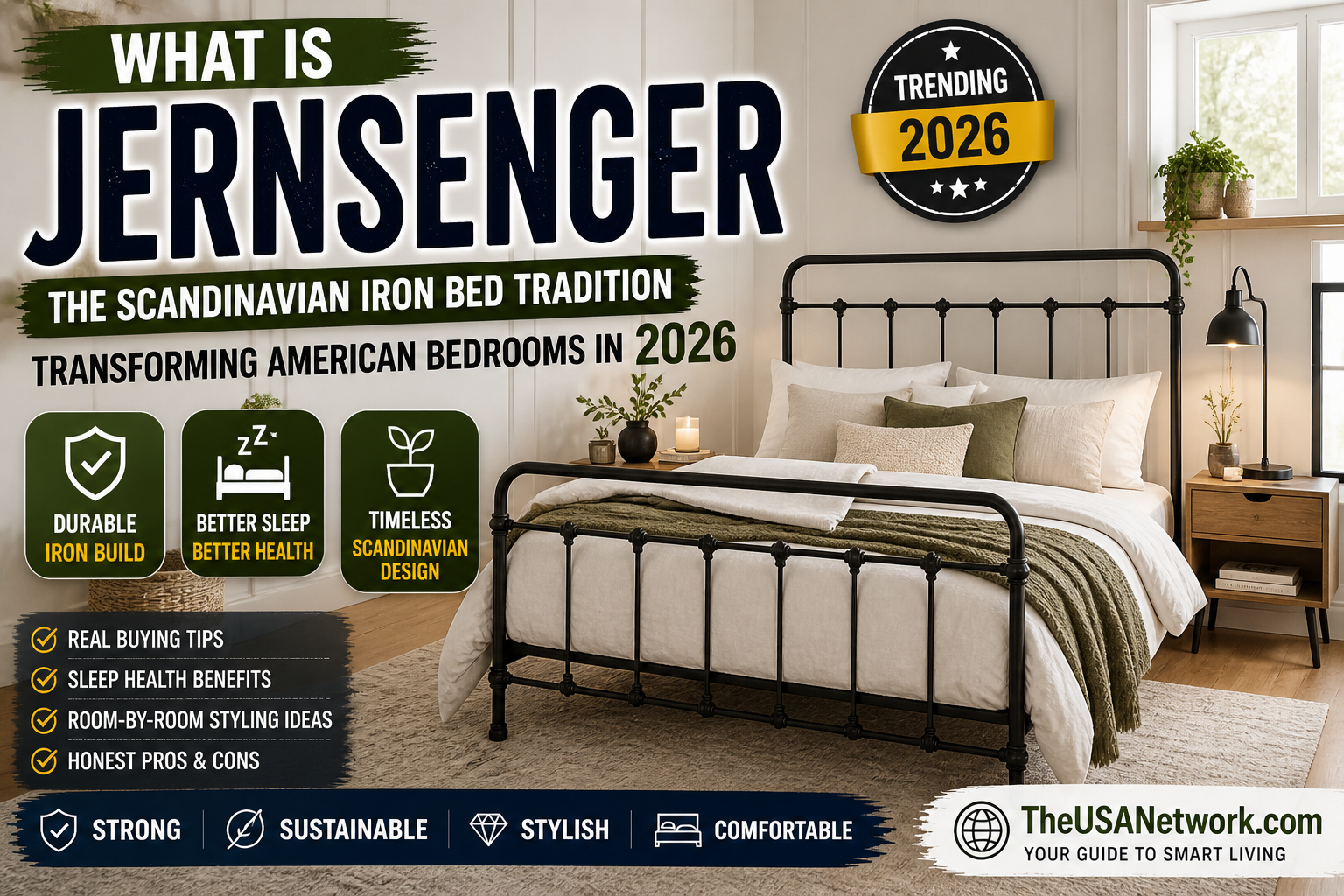
Jernsenger is the Norwegian and Scandinavian word for iron beds. Jern means iron. Senger means beds. Put them together and you have a centuries-old furniture tradition that built some of the most durable, most beautiful, and most overlooked sleeping frames in European history – and that is now quietly becoming one of the most searched furniture trends in American homes.
This guide is not like the others you may have found. Most articles cover the same definition, the same short history, and the same basic bullet-pointed benefits. This one goes further. It covers what jernsenger actually feels like to live with, how it performs differently in different types of bedrooms, what it does for your sleep environment that you cannot get from fabric-upholstered or wooden alternatives, and most importantly – what to look for and what to avoid before spending any money.
What Jernsenger Actually Means (Beyond the Translation)
The translation is simple: jernsenger means iron beds.
But that single translation carries two hundred years of design history, public health evolution, and Scandinavian craftsmanship with it – and understanding that history changes how you see the object itself.
In 19th-century Norway and across Scandinavia, furniture was built for reality. Scandinavian winters are long and cold. Living spaces were shared and close. Sanitation was a daily challenge in ways that modern households simply do not experience. In that environment, iron was not a luxury material – it was a practical solution.
Wooden beds warped in cold and moisture. They cracked under heavy loads. They harbored insects and were nearly impossible to fully sanitize. Iron beds solved every one of those problems at once. They were cold to the touch in winter, yes – but they were also stable, cleanable, pest-resistant, and capable of outlasting the family that bought them.
The word jernsenger stuck because the object it describes became part of household identity across generations. These beds were not replaced when they wore out because they rarely wore out. They were passed down, repainted, repaired, and continued to serve.
That cultural weight is why the word carries meaning beyond furniture – and why it is reappearing in 2026 in conversations about sustainable homes, intentional design, and furniture that earns its place over decades rather than years.
The History No Other Guide Tells You Completely
Iron Beds Before the Industrial Revolution
The earliest iron beds were not household furniture at all. They appeared in hospitals, military barracks, and institutional settings – anywhere that needed sleeping surfaces that could be rapidly cleaned and disinfected. The logic was straightforward: smooth metal surfaces do not absorb the bacteria, insects, or moisture that porous wood does.
In medieval and early modern Europe, bed frames were considered valuable assets. Wills and estate inventories regularly included bed frames as significant inheritable property. But wooden frames – however valuable – were vulnerable. They attracted bedbugs, lice, and other parasites in a period when pest control was primitive and ineffective. Iron beds offered a solution that institutional administrators recognized long before ordinary households could afford one.
The Industrial Revolution Changed Everything
The key turning point was not invention – it was manufacturing. Before industrial-scale metalworking, iron beds were expensive and rare. Once foundries could produce structural iron components at scale, the cost dropped dramatically.
By the mid-1800s, iron beds had moved from institutions into middle-class homes across Britain, Scandinavia, Germany, and France. In Norway specifically, the jernsenger became a standard household item, valued for both its hygiene advantages and its increasingly decorative potential.
Victorian-era manufacturers – many of them in Birmingham, England, which became the global center of iron bed production – discovered that iron could be shaped into elaborate decorative forms. Scrollwork, floral motifs, curved headboards, and intricate brass finials transformed what had been functional hospital furniture into some of the most visually striking bedroom pieces of the century.
The 20th-Century Decline and 21st-Century Revival
Iron beds fell out of mainstream fashion after World War II. The postwar period brought a shift toward lighter, cheaper, faster-produced furniture. Flat-pack wooden frames and later foam-based platform beds replaced metal frames in most consumer markets.
But the revival was inevitable. By the 2010s, two trends were converging: the return of industrial and farmhouse interior design aesthetics that specifically called for metal frames, and a growing consumer fatigue with furniture that needs replacement every few years. A jernsenger-style iron frame was both aesthetically relevant again and genuinely the more economical choice over a 10-to-20-year horizon.
Jernsenger and Sleep Quality: What the Research Suggests
This is the section that competitors do not write – but it is one of the most practically useful.
Your bed frame affects sleep quality in ways that are not always obvious. Here is how a jernsenger specifically compares to the alternatives.
Motion Transfer
Metal frames with slat supports transmit less motion across the sleeping surface than some platform frames and box spring setups. For couples, this matters. When one person moves during the night, the metal structure’s rigidity reduces how much of that movement transfers to the other side compared to a sagging wooden frame or a soft-sided platform bed.
Allergen Load in the Sleeping Environment
Studies on indoor allergen exposure consistently show that porous materials – upholstered headboards, fabric platform skirts, soft wood surfaces – accumulate dust mites, pet dander, and allergen particles faster than smooth, non-porous surfaces. A metal bed frame with no fabric components is the lowest-allergen frame type available. For anyone with asthma, eczema, or respiratory sensitivities, this is a meaningful advantage.
Temperature Regulation
Metal conducts heat differently than wood. In warm climates, an iron frame allows for better air circulation under the mattress than a solid-base platform bed. Improved air circulation under the mattress helps with temperature regulation during sleep – the mattress stays cooler because warm air can escape from beneath it rather than building up.
In cold climates, the metal frame itself feels cold initially, but the mattress sits above the frame and is not in direct contact with sleepers – so thermal discomfort from the frame’s temperature is minimal in practice.
Structural Stability and Sleep Disruption
Creaking from a bed frame is one of the most common sleep-disruptive factors that people never connect to their actual furniture. A quality jernsenger with properly tightened joints creaks far less than equivalent wooden frames because metal joints — when well-constructed – do not have the grain variation and natural movement of wood. Wood shifts seasonally as humidity changes. Metal does not.
Room-by-Room: How Jernsenger Works in Different Spaces
This is where jernsenger guidance typically ends – with general design suggestions. Here, the breakdown goes room by room with specific context.
Master Bedroom
In a master bedroom, the bed frame is the visual anchor of the space. A jernsenger works best here in two specific scenarios:
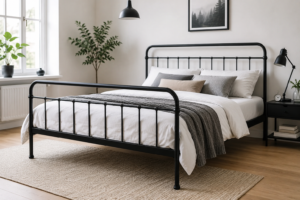
Scenario A – Minimalist or Scandinavian-influenced rooms: A clean-line iron frame in matte black or brushed gunmetal complements neutral walls, natural textiles, and simple wood nightstands without competing for attention. The frame becomes a quiet structural backbone rather than a statement piece.
Scenario B – Maximalist or Victorian-influenced rooms: An ornate jernsenger with decorative scrollwork, curved posts, and antique bronze finish becomes the centerpiece. Layer with heavy textiles — deep linen or velvet duvets, layered cushions, gathered canopy fabric – and the result is genuinely dramatic in a way that no upholstered platform bed can match.
What does not work well: a highly decorative iron frame in an already-busy contemporary room with strong graphic patterns, bold colors, and multiple competing focal points. The frame needs either visual breathing room or textile softening.
Guest Bedroom
Guest bedrooms benefit from jernsenger mainly due to its durability during irregular use. These rooms may remain unused for months, but during holidays or visits, they often experience heavy usage. Because of this pattern, having a strong and reliable setup becomes essential.
For guest rooms, a foldable or narrow-profile jernsenger is a practical choice – it frees up floor space when not in use and offers full structural stability when it is.
Children’s Bedroom
Iron frames are actually well-suited for children’s rooms for reasons that parents who have replaced cheap wooden bunk beds will immediately recognize: they survive. Kids apply lateral forces, jumping loads, and general physical abuse to their beds that lightweight wood and MDF frames cannot handle reliably. A quality iron bunk frame or single frame will outlast a child’s growth stages entirely.
The considerations here are edge sharpness and finish durability. Check that headboard and footboard edges have smooth, rounded finishing rather than sharp cuts. Powder-coated finishes withstand impact and scratching significantly better than painted finishes.
Small Apartments and Studios
In small spaces, visual weight matters as much as physical weight. An iron frame with an open, linear design creates the impression of more floor space than an upholstered bed that visually fills every inch of its footprint. The negative space visible through the frame’s structure tricks the eye into perceiving more room.
The practical caveat: traditional iron frames are heavy to move. In a studio apartment where furniture rearrangement is a regular activity, a lighter steel-construction jernsenger with easily disassembled joints is a better choice than a heavy traditional wrought iron frame.
Jernsenger vs. Wood vs. Upholstered: The Honest Comparison
No other guide currently ranking on this keyword provides a direct side-by-side comparison. Here it is.
| Factor | Jernsenger (Iron/Steel) | Wooden Frame | Upholstered Frame |
|---|---|---|---|
| Lifespan | 20–50+ years | 10–20 years | 5–10 years |
| Pest resistance | Excellent — no entry points | Poor — susceptible to woodworm, termites | Poor — fabric attracts dust mites |
| Allergen load | Very low | Low to moderate | High |
| Noise over time | Low if maintained | Moderate — wood shifts seasonally | Low |
| Moisture resistance | Good with coating; rust risk if coating breaks down | Poor — warps in high humidity | Moderate — fabric can mold |
| Visual weight in room | Low to moderate (open structure) | Moderate | High |
| Repairability | Excellent — joints tighten, can be refinished | Good — can be re-glued, refinished | Limited — fabric damages permanently |
| Environmental impact | Low — fully recyclable | Moderate — depends on source | High — foam and fabric mix difficult to recycle |
| Price range | $150–$2,000+ | $100–$1,500+ | $200–$3,000+ |
| Best for | Long-term value, allergy-sensitive users, design-conscious buyers | Cozy aesthetic, moderate budget | Comfort-first buyers, low-noise priority |
The key takeaway from this table: jernsenger wins on longevity, allergen management, repairability, and environmental profile. Upholstered frames win on initial softness and warmth. Wooden frames occupy a middle ground on most metrics.
5 Things to Check Before Buying a Jernsenger
Most buyers make decisions based on how a frame looks in a product photo. These five factors determine how it performs in your actual bedroom.
1. Joint Construction and Hardware
The single biggest predictor of long-term satisfaction with an iron bed frame is joint quality. Examine every connection point visible in product photos or, if shopping in person, physically test by gripping each joint and applying slight lateral pressure. Quality joints — tight-fit welded connections, reinforced with gussets or plates where needed — should not flex at all.
Low-quality frames use simple bolted connections with minimal reinforcement. These develop movement over time and produce creaking within months.
2. Finish Type and Thickness
Powder coating is the current industry standard for iron bed frame finishing. It is applied electrostatically and then cured under heat, creating a finish that is significantly harder and more chip-resistant than spray or brush-applied paint.
Ask or check product descriptions for powder coat thickness — 50 to 80 microns is standard quality. Frames finished with thin decorative paint rather than powder coating will chip, scratch, and rust faster, particularly at contact points where the frame meets the floor.
3. Weight Capacity Rating
Iron beds vary significantly in their rated load capacities. Entry-level frames are often rated for 300 to 400 pounds. Commercial-grade and heavy-duty versions support 600 to 1,000 pounds or more. Always check the manufacturer’s stated weight capacity and ensure it comfortably exceeds your actual load requirement — including the mattress, which typically adds 50 to 100 pounds.
4. Slat System Quality
A jernsenger’s structural integrity means nothing if the slat system that supports the mattress is poor quality. Look for slat counts above 10 for a queen or king size, and verify that slats are held in place by proper receivers rather than simply resting on a ledge. Slats that shift or fall out are one of the most common complaints in iron bed reviews.
5. Assembly Complexity
Traditional iron frames can have complex assemblies that require two people and specific tools. Modern versions range from simple bolt-together designs to highly involved constructions. If you are purchasing for a space where assembly will be performed solo, or where the frame may need to be moved regularly, check the assembly process specifically before purchasing.
Price Guide: What Your Budget Actually Gets You
Here is what different price points realistically deliver in the jernsenger market in 2026.
Under $200: Thin steel tubing, basic powder coat, minimal joint reinforcement. Functional for light use in a guest room. Expect slight flex in joints within 1–2 years under regular use. Adequate for occasional use.
$200–$500: Mid-market production frames with improved joint construction, thicker tubing, and better finish quality. The sweet spot for most buyers who want durability without premium pricing. Most contemporary minimalist designs fall here.
$500–$1,000: Premium domestic or European production with hand-finished details, reinforced structural points, and genuine warranty backing. Frames at this range will typically outlast their owners with proper care.
$1,000 and above: Artisan, hand-forged, or restored vintage frames. Structural quality is exceptional, but pricing reflects craft labor rather than purely functional value. Worth the investment for buyers making a permanent bedroom commitment.
How to Care for a Jernsenger Long-Term
Iron bed maintenance is minimal but specific. Follow these steps consistently and a quality frame will remain structurally and visually sound for decades.
Annual hardware check: Once yearly, systematically tighten every bolt and connection point. Metal vibrates subtly during use — this loosens hardware over time even without any single stressful event. A few minutes with a wrench prevents creaking and joint degradation.
Rust prevention: Check the powder coat or paint surface twice yearly for chips or scratches. Any exposed bare metal should be treated immediately — clean with fine sandpaper to remove any surface rust beginning, apply a rust-converting primer, and then touch up with matching powder coat paint. Coastal or high-humidity environments need more frequent inspection.
Cleaning: Wipe down with a slightly damp microfiber cloth to remove dust. Avoid prolonged moisture contact. Do not use bleach-based cleaners, which can degrade protective coatings and expose metal to oxidation.
Slat maintenance: Check that all slats remain properly seated in their receivers at each bed change. Slats that have shifted slightly can create uneven mattress support and, over time, reduce mattress lifespan.
Common Buying Mistakes – And How to Avoid Each One
Mistake 1: Buying by appearance alone without checking structural specs. Product photos show you the design. They do not show you joint reinforcement, tubing wall thickness, or slat system quality. Read the full product specifications before purchasing. If key structural specs are absent from the listing, contact the seller before ordering.
Mistake 2: Assuming all iron frames are the same weight. Modern steel-construction jernsenger frames can weigh as little as 40 pounds for a queen. Traditional cast iron or heavy wrought iron frames can exceed 200 pounds. For apartment living or spaces with weight-sensitive flooring, verify the frame’s actual weight before delivery.
Mistake 3: Selecting a size that does not match the room proportions. An ornate, tall-headboard jernsenger in a small bedroom with low ceilings creates visual compression — the room feels smaller and the frame looks awkward. Match the visual scale of the frame to the ceiling height and floor area of the room. Low-profile frames for smaller spaces, taller statement frames for larger rooms.
Mistake 4: Overlooking mattress compatibility. Some jernsenger frames require a specific mattress type or depth for the frame’s visual proportions to work correctly. A 16-inch memory foam mattress on a low-profile industrial frame can look disproportionate. Check that the frame’s side rail height and design accommodate the mattress depth you already own or plan to purchase.
Mistake 5: Buying vintage without inspecting the metalwork. Vintage jernsenger frames are beautiful and often structurally exceptional — but they require inspection before purchase. Look specifically for hairline cracks at welded joints, significant surface rust that has penetrated below the surface, and replaced or mismatched hardware from prior repairs. These are manageable issues, but they should be reflected in the price if present.
Why Jernsenger Is Relevant to Sustainability-Conscious Buyers
The furniture industry is one of the most wasteful consumer categories globally. Most mass-market beds — wooden platforms, upholstered frames, and composite constructions — are designed with 5-to-10-year functional lifespans in mind. When they fail, the combination of wood composites, adhesives, foam, and fabric makes them nearly impossible to recycle effectively.
Iron and steel are among the most recyclable materials in manufacturing. A jernsenger frame that reaches the end of its usable life — which, with proper care, may be 50 or more years — can be recycled without the material loss that affects composite furniture. Many antique iron beds are still in regular use after 100 years or more, having outlasted multiple generations of mass-market alternatives.
For buyers who consider furniture a long-term investment rather than a short-cycle consumer purchase, the environmental and economic logic of a quality jernsenger is straightforward: buy once, maintain simply, and own something that can be passed on rather than discarded.
Frequently Asked Questions About jernsenger
What does jernsenger mean in English? Jernsenger is a Norwegian and Scandinavian term meaning iron beds. Jern translates to iron, and senger translates to beds. In English-language usage, the term refers broadly to iron or metal bed frames with Scandinavian or European design heritage.
Are jernsenger comfortable to sleep on? The frame itself does not directly affect sleep comfort — the mattress does. A jernsenger provides the structural base that supports your mattress. A quality frame with a solid slat system will support any standard mattress type and may outperform platform bases in air circulation and motion isolation.
How do I stop my jernsenger from creaking? Creaking almost always results from loose hardware. Systematically tighten every bolt and connection point using the appropriate wrench size. If creaking persists after tightening, identify the specific point of movement by pressing on different sections of the frame and isolating the source. Rubber washers inserted between metal contact points can dampen residual vibration in frames with tight but not perfectly rigid connections.
Can I use any mattress with an iron bed frame? Most jernsenger frames are compatible with all standard mattress types — innerspring, foam, hybrid, and latex. Check that the slat spacing does not exceed what your mattress manufacturer recommends (typically no more than 2–3 inches between slats for foam mattresses, which require more consistent support than spring mattresses).
Is jernsenger better than a wooden bed frame? In terms of durability, allergen resistance, and long-term cost, quality jernsenger typically outperforms equivalent wooden frames. In terms of initial warmth, acoustic softness, and tactile naturalness, wooden frames have advantages. The better question is which trade-offs match your specific priorities.
Are vintage jernsenger frames safe to use? Vintage frames that have been inspected for cracks, rust penetration, and joint integrity are generally safe and often structurally superior to modern mass-market alternatives. Have any frame inspected before purchase if you are buying from an antique dealer or private seller.
Where can I buy a jernsenger in the United States? Iron bed frames are available through major furniture retailers, specialty metal furniture makers, antique dealers, and online marketplaces. When purchasing online, prioritize sellers who provide detailed specifications including weight capacity, joint construction details, and finish type. Reading customer reviews specifically for noise and joint durability is the most useful research step before purchase.
For more product guides and buying advice across different categories, explore “https://theusanetwork.com/magfusehub-com/ — a multi-niche platform covering home, tech, and lifestyle in 2026.
Final Thoughts: Is a Jernsenger Right for You?
The jernsenger is not the right frame for every buyer. If you want maximum softness from your furniture, a fabric headboard and padded side rails will deliver more immediate tactile comfort. If your bedroom changes themes frequently and you want furniture that adapts easily, a lightweight wooden frame is more flexible.
But if you want a frame that outlasts trends, holds its structure decade after decade, supports a clean and low-allergen sleep environment, and does all of it with the kind of design integrity that Scandinavian furniture tradition has always built — then a jernsenger is the most honest furniture decision you can make.
Buy once. Maintain simply. Sleep well.
If you found this guide useful, share it with someone redesigning their bedroom. And if you have questions about matching a jernsenger to your specific room dimensions or design style, leave them in the comments — we will answer.